

Paul Klee
1879 – 1940

Paul Klee was born on December 18th, 1879 in Munchenbuchsee near Bern. A music teacher’s son, he was a talented violinist, and was invited to play at the Musical Association of Bern already at the age of 11, but then turned his attention to the pictorial art, and in 1898 he started studying at the Academy of Fine Arts in Munich, where he studied alongside Kandinsky from 1900. From 1903 to 1905 he worked on a suite of etchings titled "Inventions", which became his first exhibited works.
In 1906 Klee married Lili Stumpf, a Bavarian pianist, and they had a son, Felix Paul. This temporarily slowed his artistic output, and his first one-man exhibition in Bern and three other Swiss cities took place only in 1910.
In January 1911 he met Alfred Kubin, an art critic, who introduced him to artists and critics. The same winter he joined "The Blue Rider" association and started experimenting with watercolors and landscapes, such as his painting 'In the Quarry'
Klee’s creative breakthrough happened in 1914 after his trip to Tunisia when he started painting abstract pictures, the first of which was titled "In the Style of Kairouan". During the First World War, when his friends August Macke and Franz Marc were killed, a pen and ink graphic work, "Death for an Idea", was created as a reaction to the loss. In 1916 he was called up for military service in the German army where he worked as a clerk and painted camouflage on airplanes.
In 1917 art critics acclaimed Klee as one of the best German artists, and the three-year contract with art dealer Hans Goltz brought him fame and commercial success.
From 1921 to 1931 Klee taught and lived at the Bauhaus in Dessau. He and Kandinsky lived in one of the houses designed by Walter Gropius specially for the school, and there was a great friendship between them. In 1923 they organized "Die Blaue Vier", which also included Jawlensky and Feininger. Klee visited the USA to deliver lectures and exhibit his own works, and also took part in the Parisian Surrealists’ exhibition in 1925.
In 1931 he started teaching at the Dusseldorf Academy of Fine Arts, but was forced to leave it already in 1933 under pressure from the Nazis. He then moved to Switzerland with his family and lived there up to his death in 1940.
Paul Klee works

"In the Quarry', 1911

"In the Style of Kairouan", 1914

"Death for the Idea", 1915
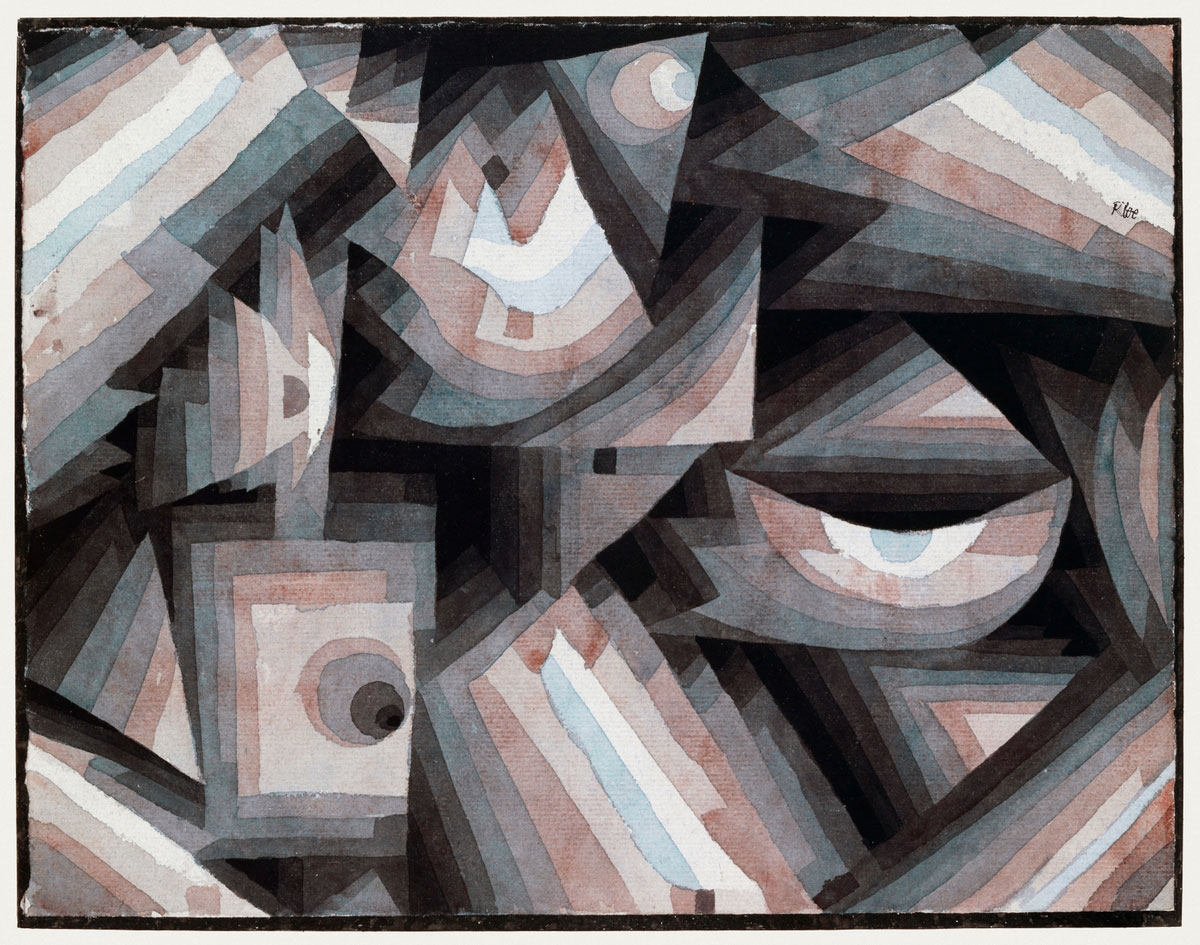
"Crystal gradation", 1921

"Ad Parnassum", 1932
