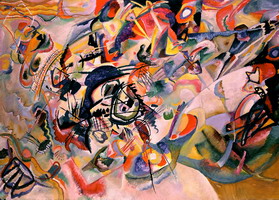
Crinoline Lady
Damen in Krinolinen
1909
Oil on canvas
37.9 × 50.6" (96.3 × 128.5 cm)
Moscow, The State Tretyakov Gallery
In the 1900s, Kandinsky was a supporter of the ideas of Symbolism and Art Nouveau. He collaborated with the magazine Mir iskusstva (World of Art) — the main publication of Russian Symbolism. Themes typical of artists of this movement appeared in his works, related to the aristocratic culture of the 18th and first half of the 19th century. Crinoline Lady is one of the central works on this theme. It combines an Impressionist understanding of color (perceived as a result of a certain intensity of illumination), a tendency toward monumental and decorative generalization characteristic of Art Nouveau, and a certain understatement arising from an unclear storyline, typical of Symbolism. The masters of Mir iskusstva revived the world of manorial estates as if it were real, looking at the past with a distance created by lyrical and ironic intonations and the construction of "toy-like" images. Kandinsky builds the composition without relying on the plot: it is organized on the basis of rhythm in the arrangement of figures that emerge as if they were ghosts of the past. The artist seeks to convey the flavor of a bygone life.
1 comments
2014
September 20
hank from california: Art is life...CREATION/PROCREATION. Gotta love the creators. But, I see this same great stuff weekly on the New Yorker Magazine. We're forever finding someone or thing to lionize.Your comment
More from 1909


More from Moscow, The State Tretyakov Gallery